
Signage vs Digital Signage: What Is the Difference?

Signage has always been part of how businesses guide, inform, and communicate with people. A shop sign tells customers where a store is. A directory board helps visitors find the right floor. A poster promotes an offer. A safety sign gives important instructions.
But as businesses need faster updates, more engaging visuals, and better control over content, many are now moving from traditional signage to digital signage.
The difference is simple: traditional signage is usually fixed, printed, and manually replaced, while digital signage uses screens to display content that can be updated, scheduled, and managed digitally.
For businesses, this difference matters because the right signage choice can affect customer experience, branding, operations, and communication efficiency.
At Southpaw, we support businesses with digital signage systems, interactive displays, multitouch solutions, and customised visual communication setups for different environments.
What Is Signage?

Signage refers to visual signs used to communicate information. It can be printed, painted, fabricated, mounted, or displayed in a fixed location.
Traditional signage is commonly used for:
Shopfront signs
Directional signs
Posters
Banners
Static directory boards
Safety signs
Building labels
Room signs
Menu boards
Promotional displays
Traditional signage works well when the message does not change often. For example, a shop name, toilet direction sign, fire exit label, or permanent building directory may not need frequent updates.
The main limitation is flexibility. If the information changes, the sign usually needs to be reprinted, replaced, or manually updated. This can take time and cost more over the long term, especially for businesses that update promotions, directions, event schedules, or announcements regularly.
What Is Digital Signage?

Digital signage uses screens or displays to show digital content. This content may include images, videos, slides, menus, announcements, directories, promotions, wayfinding information, or interactive experiences.
Unlike traditional signage, digital signage can be updated more easily. With a content management system, businesses can upload, schedule, and publish content across one or multiple screens.
Digital signage may include:
LED screens
LCD displays
Video walls
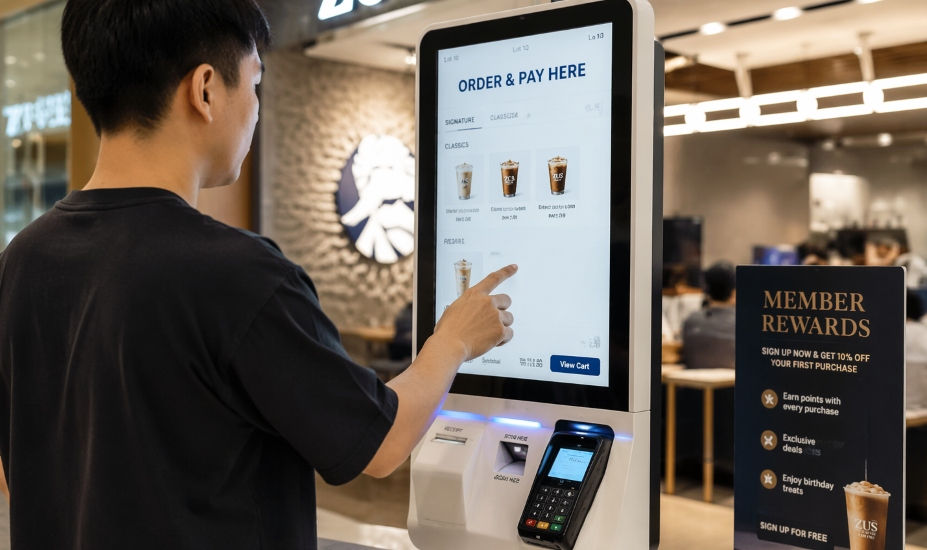
Interactive kiosks
Touchscreen directories
Digital menu boards
Digital posters
Wayfinding screens
Corporate announcement screens
Retail promotional displays
For businesses that need remote updates and content scheduling, SP Signage helps manage digital signage content more efficiently through a cloud-based system.
Main Differences Between Signage and Digital Signage
The biggest difference between signage and digital signage is how the content is displayed and updated.
Feature | Traditional Signage | Digital Signage |
|---|---|---|
Content format | Printed or static | Digital images, videos, slides, directories, live content |
Updates | Manual replacement needed | Can be updated digitally |
Scheduling | Not flexible | Can schedule by date, time, screen, or location |
Engagement | Static message | More dynamic and visually engaging |
Interactivity | Usually not interactive | Can include touchscreens, QR codes, and wayfinding |
Best for | Fixed information | Changing promotions, announcements, directions, and campaigns |
Maintenance | Reprinting and physical replacement | Screen, software, and content management |
Scalability | Harder to update across many locations | Easier to manage across multiple screens |
Traditional signage is useful when the message is permanent. Digital signage is useful when the message changes often or needs to be more engaging.
When Traditional Signage Still Works Well
Traditional signage is not outdated. It still has an important role in many business environments.
It works well for information that stays the same, such as:
Business names
Room labels
Safety instructions
Emergency exits
Building identification
Permanent directional signs
Regulatory notices
Simple wayfinding signs
Traditional signage can also be practical in areas where screens are not suitable, such as outdoor locations with harsh weather, low-power areas, or places where the message does not need to change.
For many businesses, traditional signage provides a stable foundation. It is simple, visible, and reliable when used for the right purpose.
When Digital Signage Is the Better Choice
Digital signage becomes more useful when information changes regularly or when the business wants to create a more dynamic experience.
Digital signage is often the better choice when:
Promotions change often
Content needs to be scheduled
Screens are used across multiple locations
Marketing teams need remote control
Different messages must show at different times
The business wants to display videos or animations
Visitor guidance needs to be more interactive
Campaign playback or proof of play is needed
A more modern customer experience is important
For example, a retail store may use digital signage to update promotions weekly. A shopping mall may use a digital directory to guide visitors and promote tenant offers. A corporate office may use screens for announcements and internal communication.
The main advantage is control. Instead of reprinting signs, businesses can update content digitally.
Digital Signage Examples by Business Type
Digital signage can be used in many different industries. The best setup depends on the space, audience, and communication goal.
Retail Stores
Retail stores can use digital signage for product launches, seasonal promotions, new arrivals, brand videos, discounts, and campaign messaging.
This helps stores keep promotional content fresh without replacing printed posters every time a campaign changes.
Shopping Malls
Shopping malls can use digital signage for tenant directories, wayfinding, event announcements, tenant promotions, and mall campaigns.
For malls, Southpaw also provides a digital mall directory and shopping mall signage solution with QR code mobile directions. This allows visitors to scan a route and continue viewing directions on their phone after leaving the directory screen.
Corporate Offices
Corporate offices can use digital signage for visitor welcomes, meeting updates, internal announcements, HR notices, safety reminders, and company news.
This is especially useful for offices with multiple departments, floors, or branches.
Education Spaces
Schools, colleges, and training centres can use digital signage for timetables, event notices, campus announcements, wayfinding, emergency updates, and student communication.
For learning environments that need interactive displays, Southpaw’s multitouch solutions can also support more engaging presentation and collaboration experiences.
Showrooms and Events
Showrooms and event spaces can use digital signage for product demos, brand storytelling, interactive presentations, video displays, and customer engagement.
This helps businesses communicate product features more visually and create a more memorable visitor experience.
Cost and Maintenance: Which One Is More Practical?
Traditional signage may be cheaper upfront when the message is simple and permanent. For example, a fixed room label or shop sign does not need software, screens, or a media player.
However, digital signage can become more practical when content changes often. Instead of repeatedly printing posters, banners, menus, or directory updates, businesses can update digital content through a system.
The real cost comparison depends on:
How often the content changes
How many signs or screens are needed
Whether content must be updated remotely
Whether the business needs scheduling
Whether multiple locations are involved
Whether analytics or proof of play is required
Whether interactive features are needed
So the answer is not that one is always cheaper than the other. Traditional signage is practical for fixed messages. Digital signage is practical for flexible, changing, or multi-location communication.
Can Signage and Digital Signage Work Together?
Yes. In many environments, the best approach is to use both.
Traditional signage can handle permanent information, while digital signage can handle flexible content.
For example, a shopping mall may use static signs for emergency exits, toilet labels, and permanent wayfinding, while using digital signage for directories, tenant promotions, event updates, and interactive maps.
A corporate office may use traditional signage for room names and floor labels, while using digital signage for announcements, visitor messages, and internal updates.
This combined approach helps businesses keep important fixed information visible while still enjoying the flexibility of digital content.
How Southpaw Supports Digital Signage Projects
Southpaw provides digital signage and interactive display solutions for businesses that need more flexible, modern, and manageable communication systems.
Through SP Signage, businesses can manage digital signage content using a cloud-based system. This supports content scheduling, screen management, broadcasting, proof of play, and monitoring.
Southpaw can also support:
Shopping mall signage
Digital mall directories
QR code wayfinding
Interactive kiosks
Multitouch screens
Video wall displays
Custom software development
Screen content management
Digital signage project support
For businesses that need a more interactive experience, multitouch solutions can also be used for showrooms, exhibitions, education spaces, public venues, and interactive customer journeys.
Upgrade from Static Signs to Smarter Digital Signage
Traditional signage is still useful for fixed information, but digital signage gives businesses more flexibility when content needs to change.
If your business needs to update promotions, manage screens remotely, display directories, improve wayfinding, or create a more engaging visitor experience, digital signage may be the better option.
Looking for a better way to update, schedule, and manage your business signage content? Explore SP Signage by Southpaw and discover how digital signage can support your business communication.
Frequently Asked Questions
What is the difference between signage and digital signage?
Traditional signage usually uses printed or fixed materials, while digital signage uses screens to display content that can be updated, scheduled, or changed digitally.
Is digital signage better than traditional signage?
It depends on the purpose. Traditional signage works well for fixed messages, while digital signage is better for changing content, promotions, announcements, directories, and interactive experiences.
Can digital signage be updated remotely?
Yes. With a cloud-based digital signage system, content can be updated remotely through a content management system.
What businesses should use digital signage?
Retail stores, shopping malls, offices, schools, showrooms, healthcare spaces, public venues, and multi-location businesses can benefit from digital signage.
Can digital signage replace all traditional signage?
Not always. Many businesses use both. Traditional signage is useful for permanent labels and safety signs, while digital signage is better for flexible and changing content.
Is digital signage suitable for shopping malls?
Yes. Digital signage is suitable for shopping malls because malls often need to update tenant directories, promotions, events, wayfinding information, and visitor announcements.
Does digital signage need special software?
For basic single-screen use, some setups may be simple. However, businesses that need scheduling, remote updates, multi-screen control, proof of play, or content monitoring usually benefit from digital signage software such as SP Signage.


Comments